
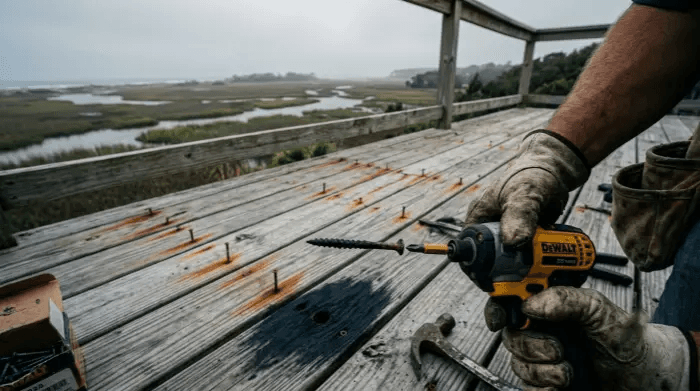
什么是自攻螺丝?
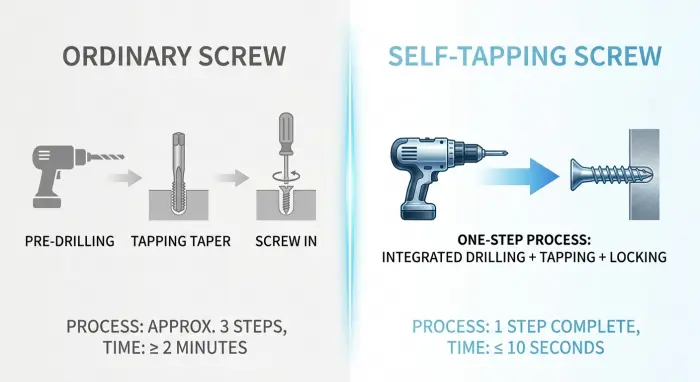
Different from ordinary machine screws, self-tapping screws are designed with a tapered thread-forming point that cuts or deforms mating threads in a pre-drilled pilot hole. During installation, the screw is driven into a pre-drilled pilot hole and forms mating threads by displacing or cutting the surrounding material, locking the connection tightly in one step, locking the connection tightly in one step. This unique working principle effectively shortens construction cycles and reduces manual operation errors. Whether for large-scale engineering projects or small batch product assembly, self-tapping screws can significantly improve overall working efficiency, which is why they are widely adopted across various industries worldwide.
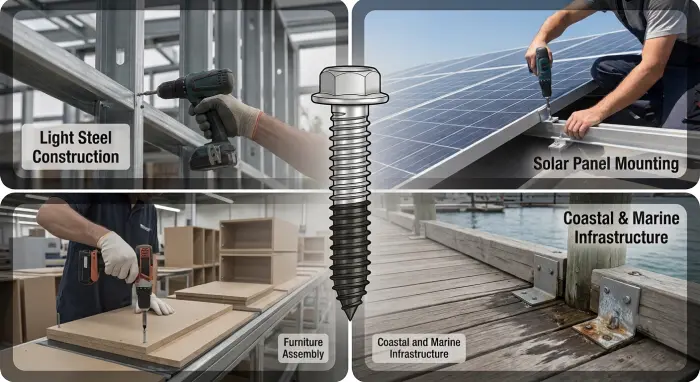
The practical value of self-tapping screws is reflected in their strong environmental adaptability and stable fastening performance. Common application scenarios cover indoor daily assembly, light steel structure fixation, outdoor building construction, solar equipment installation and coastal engineering projects. In humid, high-salt and long-term exposed environments, high-quality self-tapping screws can resist loosening, corrosion, and structural degradation over extended service life, ensuring the long-term stability of structural connections. Different material specifications and structural designs also enable the product to adapt to diverse material hardness and installation requirements.
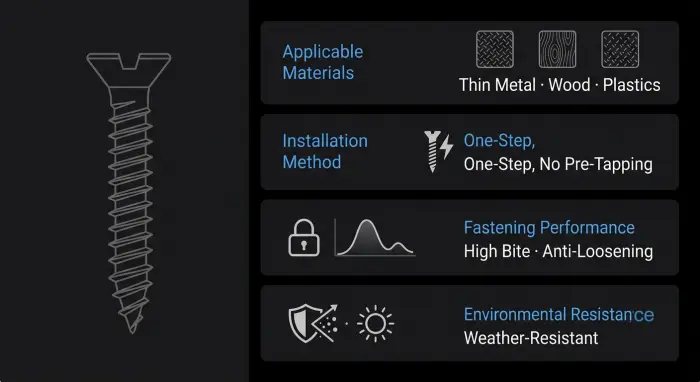
| Key Parameter | Standard Self-Tapping Screw Features | Applicable Materials |
| Installation Method | No pre-tapping required; a pilot hole is recommended for most applications | Pre-drilled metal, plastic, wood, and fiber composites |
| Fastening Performance | High thread engagement and clamping force, anti-loosening thread design | Solid wood, density board, plastic parts |
| Environmental Resistance | Basic corrosion-resistant and weather-resistant properties | Indoor & conventional outdoor scenarios |
| Service Life | Stable connection for long-term daily use | General assembly and construction projects |
In practical industrial applications, the quality difference of self-tapping screws directly affects project safety and service life. Inferior products often suffer from insufficient drilling force, thread slipping, easy corrosion and short service life, which may lead to structural loosening and subsequent maintenance costs. Therefore, choosing high-standard self-tapping screws is the key to guaranteeing assembly quality and project durability for manufacturers and engineering contractors
Related News
Other news you might be interested in
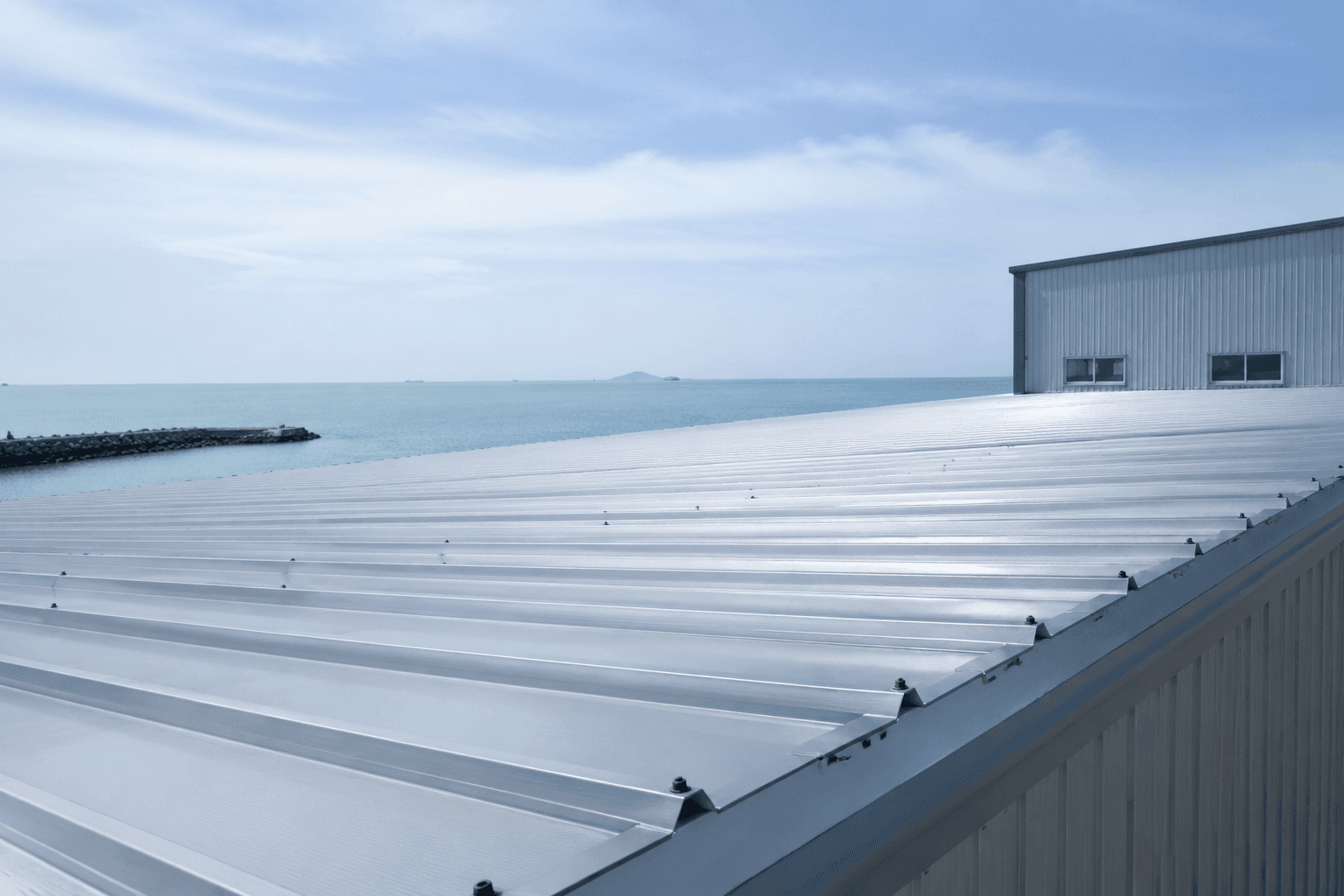
Metal Roofing Screw Selection: Length, Head Type, Washer, and Substrate
Selecting metal roofing screws is not simply a matter of choosing a diameter and placing an order. The correct fastener must match the roof panel profile, the substrate, the required thread engagement, the expected corrosion environment, and the sealing method at every penetration point.
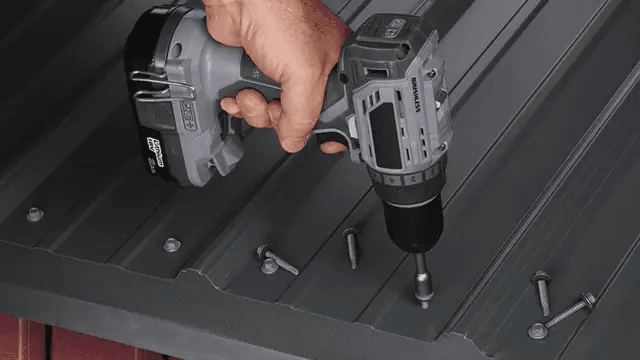
Self-tapping screws with EPDM washers: Maintain reliable fastening even under extreme environments
EPDM (Ethylene Propylene Diene Monomer) washers are made from a synthetic rubber that is highly resistant to UV rays, ozone, and extreme temperatures. Unlike standard rubber washers that crack or harden over time, EPDM maintains flexibility.This makes them well-suited for desert and coastal climates, where heat, sun, and sand exposure can quickly damage other materials. When paired with self-drilling screws, they create a tight seal that keeps moisture and dust out.
Want to know more?
Get in touch with us for more information about our services and products.